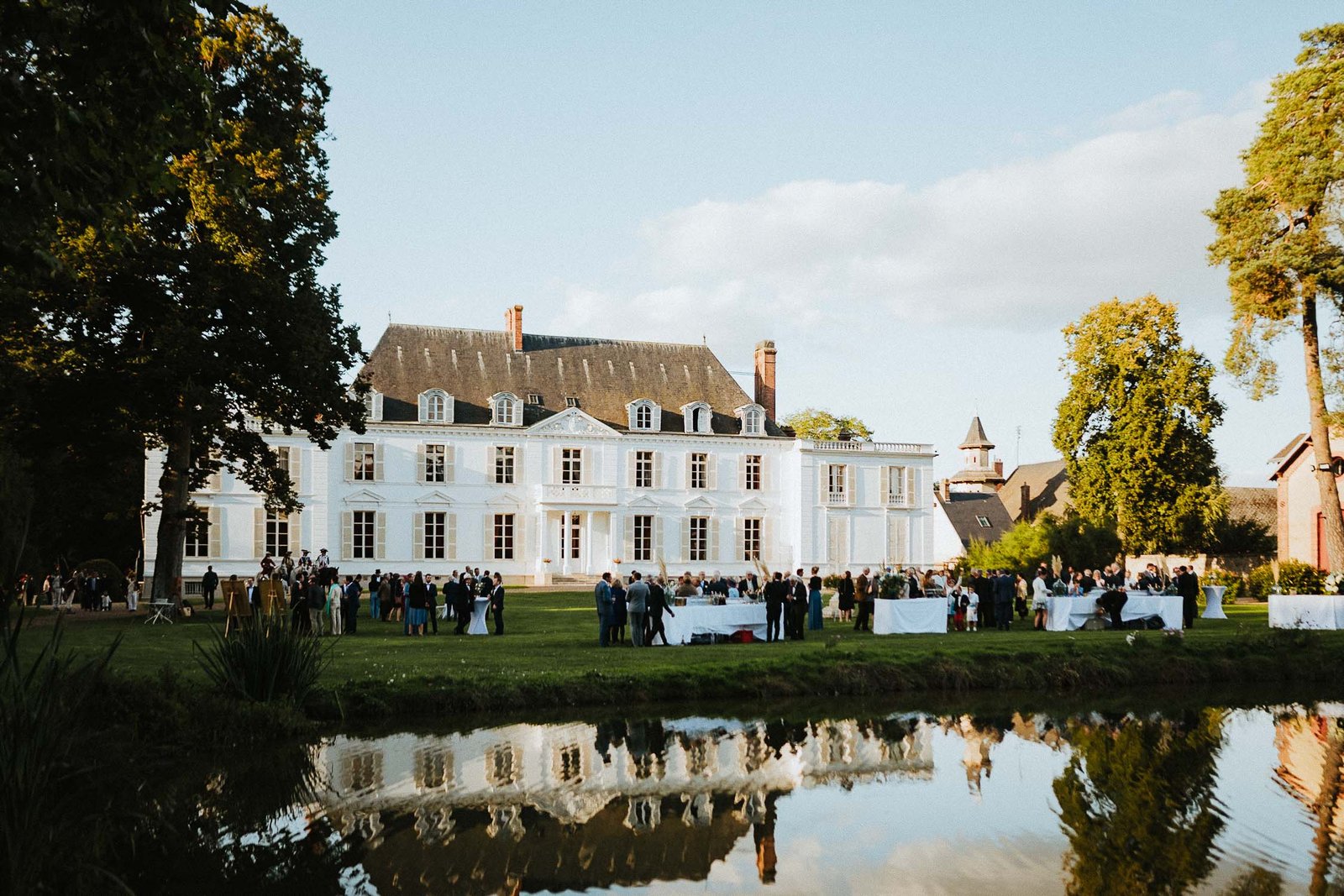
Chateau Wedding in France: What to Know Before Booking
A château wedding in France has a very particular feeling.
There is the architecture, of course. The old stone, the gardens, the long driveways, the quiet rooms, the history of the place. For many international couples, it carries exactly the kind of atmosphere they imagine when they start dreaming about a destination wedding in France.
But a château is not just a beautiful backdrop.
It will shape the whole rhythm of your wedding: how your guests arrive, where they sleep, where the ceremony happens, how the dinner flows, what happens if it rains, how much time you need between each part of the day, and how the story will feel in photographs.
That is why choosing a château wedding venue in France is not only an aesthetic decision. It is also a practical one.
Here is what I would look at before booking.
If you are still at the wider planning stage, you may also want to read this guide on how to plan a destination wedding in France.
Why a château wedding in France feels so special
A château wedding in France often brings together several things couples are looking for in a destination wedding.
There is a sense of place. A château does not feel like a neutral venue. It has its own atmosphere, its own architecture, its own landscape. You are not just renting a reception room. You are stepping into a setting that already tells part of the story.
It can also create a real weekend experience.
Many châteaux offer gardens, courtyards, terraces, reception rooms and sometimes accommodation on site. This can make the wedding feel more relaxed, especially when guests are travelling from abroad. Instead of everyone moving from one place to another all day, the whole celebration can unfold in one location.
That is one of the reasons château weddings work so well for international couples. They can become more than a wedding day. They can become a few days spent together in France.
But the beauty of the place should not be the only reason to book it.
A château can look incredible in photos and still be complicated to use on the day. The spaces may be far apart. The interiors may be dark. The rain plan may feel less elegant than the garden ceremony. The closest airport may be two hours away. The venue may have noise restrictions, required vendors, or limited accommodation.
The right château is not simply the most impressive one.
It is the one that supports the experience you want to create.
Is a French château wedding right for your celebration?
Before falling in love with a venue, it helps to ask a simple question: does this place fit the way you want to live your wedding?
A château can be perfect if you want:
- a destination wedding with a strong sense of place;
- a weekend celebration rather than just one day;
- a venue with history, gardens and architectural character;
- enough space for ceremony, cocktail hour, dinner and portraits;
- a setting that feels elegant without needing too much decoration;
- a place where guests can slow down and enjoy being together.
But it may not be the best fit if:
- your guest list is very large and the venue has limited capacity;
- most guests need easy city access;
- you want a very simple, low-logistics wedding;
- you do not want to manage transportation or accommodation questions;
- the venue is beautiful but not practical in bad weather;
- the château feels too formal for the atmosphere you want.
This is where many couples need to be honest with themselves.
A château wedding can be incredibly beautiful, but it should not force you into a wedding that does not feel like you. Some châteaux feel grand and formal. Others feel more intimate, relaxed, countryside, almost family-home-like.
The best choice is not always the most spectacular venue. It is the one where you can imagine yourselves being comfortable.
The best regions for a château wedding in France
France has many regions where château weddings are possible. Each one creates a different experience for you and your guests.
Loire Valley
The Loire Valley is one of the most obvious regions for château weddings. It is known for its historic castles, gardens and romantic countryside.
It can be a strong choice if you want a classic French château atmosphere, with a sense of heritage and elegance. It is also relatively accessible from Paris compared to some southern regions.
For photography, the Loire Valley often offers beautiful architecture, soft countryside light and strong visual variety between gardens, façades and interiors.
Paris region
A château near Paris can be very practical for international guests.
The main advantage is access. Guests can fly into Paris, spend time in the city, then travel to the wedding venue without crossing the whole country. This can make the logistics easier, especially for a shorter destination wedding.
The atmosphere will vary a lot depending on the venue. Some places feel very refined and historic. Others are more discreet, surrounded by gardens or woodland.
If many of your guests are travelling from abroad, do not underestimate how much easier a venue near Paris can make the experience.
If this region is on your shortlist, you can also explore a few of my favorite wedding venues near Paris, with a photographer’s eye on light, flow and guest experience.
Normandy
Normandy can be a beautiful option for couples who want a softer, more countryside feeling.
The region has old estates, manors and châteaux, often with a more intimate atmosphere than the very formal image people sometimes have of French castles. It can also work well for couples looking for greenery, texture, and a slightly slower rhythm.
The weather can be less predictable, so the indoor backup plan matters. But when the light is good, Normandy can have a very gentle, cinematic quality.
Burgundy
Burgundy is a strong choice if you want a wedding connected to wine, food and countryside elegance.
Many venues in the region feel warm, historic and refined without being too polished. It can work beautifully for couples who want a French experience built around good meals, landscapes and a slower weekend rhythm.
For guests, the travel logistics need to be checked carefully. Some venues may require transfers from train stations or airports.
Bordeaux
Bordeaux and its surrounding wine regions can offer a very rich destination wedding experience.
Châteaux here often connect naturally with vineyards, long dinners, wine culture and a more generous guest experience. It can feel less like a “castle wedding” in the fairy-tale sense and more like a French estate celebration.
If food and wine are central to your wedding, Bordeaux can be very interesting.
Provence and the South of France
The South of France has a very different feeling.
The light is stronger. The landscapes are warmer. The atmosphere can feel more Mediterranean, with outdoor dinners, olive trees, stone walls, lavender, vineyards or hilltop views depending on the venue.
A château wedding in Provence or the South of France can be stunning, but it often comes with higher demand, seasonal pricing and more complex travel logistics.
It is a beautiful option if you want the full destination experience, but it needs careful planning.
What to check before booking a château
Once you start comparing venues, the photos can become overwhelming. Many châteaux look beautiful online.
The important thing is to move from “Do we love the look?” to “Can this place really hold the wedding we want?”
Here are the points I would check carefully.
Guest capacity
Look at both the official capacity and the real comfort of the space.
A room may technically hold 120 guests, but feel tight once you add tables, chairs, flowers, musicians, speeches and service movement. The same applies to outdoor ceremonies. A garden can look huge in photos, but the ceremony area may be more limited than expected.
Ask how many guests the venue can host comfortably for:
- the ceremony;
- cocktail hour;
- dinner;
- dancing;
- rainy-day backup.
Do not only ask for the maximum number. Ask what works well.
Accommodation
For a destination wedding, accommodation is one of the biggest questions.
Some châteaux can host the couple, close family and a few guests. Others can accommodate a larger part of the wedding party. Some have no accommodation at all, or only limited rooms.
This changes the whole guest experience.
If most guests cannot stay on site, you will need nearby hotels, transport, taxis or shuttle buses. That is not necessarily a problem, but it needs to be planned.
A château with accommodation can make the weekend feel more relaxed. Guests arrive, settle in, spend time together, and do not have to think about moving around too much.
Exclusive use
Ask whether the château is fully private for your wedding.
This matters more than people think. Some venues offer exclusive use of the property. Others may still have hotel guests, visitors, or restricted areas.
If privacy is important to you, be very clear about what “exclusive use” actually means.
Does it include the gardens? The main rooms? The accommodation? The whole weekend? The morning after?
The answer can change the feeling of the wedding.
Vendor rules
Some châteaux have in-house catering or a list of preferred vendors. Others allow you to bring your own planner, florist, caterer, musicians and photographer.
Neither option is automatically better.
Preferred vendors can make planning easier, especially from abroad. But if you want a very specific style or team, restrictions may be frustrating.
Ask early:
- Can we choose our own planner?
- Can we bring our own photographer?
- Is catering in-house or external?
- Are there corkage fees?
- Are furniture, lighting and tableware included?
- Are there extra costs for setup or late-night hours?
These details can have a real impact on the final budget.
Noise restrictions and end time
Many French châteaux are located in quiet countryside areas or protected environments.
This often means noise restrictions.
Ask when amplified music must stop, whether the party can continue indoors, and whether there are limits for outdoor dancing or late-night celebrations.
This is especially important if you imagine a lively party. A venue can be perfect for the ceremony and dinner, but not ideal for dancing until late.
Rain plan
This is one of the most important questions.
Many couples fall in love with the garden ceremony, the terrace dinner or the outdoor cocktail hour. But in France, even in beautiful regions, weather can change.
A strong château wedding venue should have a backup plan that still feels good.
Ask yourself:
- Where does the ceremony happen if it rains?
- Is the indoor option beautiful or just functional?
- Can cocktail hour move inside naturally?
- Is there enough room for dinner and dancing indoors?
- Will guests need to walk outside between spaces?
- Are there covered areas for photos?
The rain plan should not feel like a punishment.
It should feel like a real version of the wedding.
Transport and access
For international guests, access matters.
A château may look perfect, but if it is far from airports, train stations and hotels, your guests will need clear guidance.
Check:
- closest airport;
- closest train station;
- transfer time from Paris or another major city;
- taxi availability;
- parking;
- shuttle options;
- accommodation nearby;
- whether guests can move safely after the party.
The more remote the venue, the more you need to think like a guest.
A beautiful location can still create stress if people do not know how to get there or how to leave.
How much does a château wedding in France cost?
The cost of a château wedding in France can vary enormously.
It depends on the region, the reputation of the venue, the number of guests, whether accommodation is included, the season, the day of the week, the length of the rental, and what the package includes.
Some venues offer simple rental fees. Others offer full wedding packages. Some include accommodation, breakfast, furniture or coordination. Others charge separately for almost everything.
The main budget points to clarify are:
- venue hire;
- exclusive use;
- accommodation;
- catering and drinks;
- furniture and tableware;
- planner or coordination;
- flowers and design;
- lighting;
- music;
- transportation;
- extra hours;
- heating or air conditioning;
- cleaning or security fees.
This is why comparing two châteaux only by their venue fee can be misleading.
One venue may look more expensive but include more. Another may seem accessible at first, but require many external rentals and extra logistics.
If you want a deeper view of budgets, I have also written a dedicated guide on destination wedding costs in France.
Civil, symbolic or religious ceremony: what is possible?
This is an important point for international couples.
In France, the legally binding civil ceremony usually takes place at the mairie, the local town hall. For many foreign couples, the legal part is often done in their home country before or after the wedding in France.
The ceremony at the château is then usually symbolic, secular, religious, humanist or celebrant-led.
This is very common.
It gives couples more freedom to create a ceremony that feels personal, emotional and adapted to the place. You can exchange vows in the garden, under a tree, in front of the château, in a courtyard, or inside if the weather changes.
If you are unsure how this works, you may find this guide useful: Non-Religious Wedding Ceremony.
The main thing is to separate two questions:
- What do we need legally?
- What do we want emotionally for the ceremony we will share with our guests?
Once that is clear, planning becomes much simpler.
What a château changes for photography
A château can be an incredible setting for wedding photography.
But again, it is not only about the façade.
What matters is how the place works throughout the day.
The light
Light changes everything.
Some châteaux have beautiful gardens in the late afternoon. Others have ceremony spaces that are very bright at midday, which can be more difficult for photos. Some interiors are elegant but dark. Some reception rooms look amazing in person but need careful lighting to photograph well.
When visiting a venue, try to imagine the light at the actual time of your wedding.
Where will the sun be during the ceremony? Will the cocktail hour be in harsh light or shade? Is there a good place for portraits later in the day? What happens indoors if it rains?
These questions matter more than people think.
The timeline
Châteaux are often larger than standard venues.
This is beautiful, but it means movement takes time.
The getting-ready rooms may be upstairs. The ceremony may be in the garden. Cocktail hour may be on the terrace. Dinner may be in another building. Couple portraits may happen near the façade, in the gardens, or somewhere further away.
All of this creates flow, but it also needs breathing room.
If the timeline is too tight, the day can start to feel rushed. And when a château wedding is rushed, you lose part of what makes it special.
For photography, I would always prefer a timeline that allows you to enjoy the place without turning the day into a photoshoot.
The balance between place and people
A château is visually strong.
That can be a gift, but it can also become a trap.
The venue should not take over the whole story. Your wedding is not only about stone walls, gardens and staircases. It is about people. Your parents. Your friends. The nervous moments before the ceremony. The laughter at dinner. The small gestures. The way everyone slowly relaxes into the day.
The château gives context.
But the heart of the story is still you and the people around you.
As a photographer, that balance matters a lot to me. I want to show the place, because it is part of the memory. But I never want the venue to become more important than the emotions happening inside it.
Indoor spaces
Do not forget to look carefully at the interiors.
Many château weddings rely heavily on outdoor spaces in the photos: gardens, façades, courtyards, terraces. But if the weather changes, the indoor spaces become essential.
Ask yourself:
- Are the getting-ready rooms bright enough?
- Is there a beautiful indoor ceremony option?
- Are there interesting rooms for portraits if it rains?
- Does the dinner room feel warm and comfortable?
- Is the dance floor easy to light and photograph?
A venue with strong indoor options is often much safer than a venue that only works in perfect weather.
Questions to ask before booking your château
Before signing, here are the questions I would ask.
About the venue
- Is the château exclusive for our wedding?
- What spaces are included in the rental?
- How many guests can you host comfortably?
- How many guests can sleep on site?
- Are there hotels nearby?
- Is there a minimum stay?
- What time can we access the venue?
- What time does the wedding need to end?
About logistics
- What is the closest airport or train station?
- Do guests usually need shuttle transportation?
- Is parking available?
- Are taxis easy to find late at night?
- Is the venue accessible for older guests or guests with mobility needs?
About vendors
- Can we choose our own vendors?
- Is there an in-house caterer?
- Are there preferred vendors?
- Can we bring our own photographer?
- Are there restrictions for music, lighting, drone or fireworks?
- Is there a venue coordinator on the day?
About the ceremony
- Where does the ceremony usually take place?
- What is the rain plan?
- Is the backup ceremony space large enough?
- Can we have a symbolic or celebrant-led ceremony?
- Are there sound restrictions outdoors?
About photography
- Where is the best light during the day?
- Are the getting-ready rooms bright?
- Can we use the gardens and interiors for portraits?
- Are there any restricted areas?
- What happens if it rains?
- Is there enough time in the timeline for couple photos without missing the cocktail hour?
These questions are not about making the planning heavier.
They are about avoiding surprises.
A good venue will be used to answering them.
My advice as a destination wedding photographer in France
If you are dreaming of a château wedding in France, my advice is simple: choose a place that feels beautiful, but also easy to live in.
A wedding venue should support the day, not complicate it.
The château should help your guests feel welcomed. It should give you enough space to breathe. It should offer a real rain plan. It should make the timeline smoother, not tighter. It should give you beautiful light and meaningful spaces, but without forcing you to spend the whole day posing.
The best château weddings I have seen are not the ones where everything feels the most luxurious.
They are the ones where the place feels connected to the couple. Where the guests understand why they travelled there. Where the ceremony feels personal. Where the dinner has warmth. Where the couple can actually enjoy the atmosphere they chose.
A château can give your wedding a strong sense of place.
But what will make it unforgettable is how naturally the day unfolds inside it.
If you are planning a destination wedding in France and want a photographer who can document the place, the people and the feeling of the day with a natural and sensitive approach, you can discover more about my work as a destination wedding photographer in France.
FAQ
How much does a château wedding in France cost?
The cost depends on the region, the venue, the number of guests, the season, accommodation, catering and what is included in the package. A château wedding can range from a relatively simple venue rental to a high-end multi-day celebration. The most important thing is to compare what is included, not only the rental fee.
Can foreigners get legally married in a French château?
Usually, the legal civil ceremony in France takes place at the mairie, the local town hall. Many international couples choose to do the legal paperwork in their home country and have a symbolic, secular or celebrant-led ceremony at the château.
What is usually included in a château wedding package?
It depends on the venue. Some packages include exclusive use, accommodation, catering, furniture, coordination or breakfast. Others only include the venue rental. Always ask what is included, what is optional, and what must be booked separately.
Which region is best for a château wedding in France?
It depends on the atmosphere you want. The Loire Valley is classic and historic, the Paris region is practical for international guests, Normandy feels softer and countryside, Burgundy and Bordeaux are strong for food and wine, and Provence or the South of France offer warmer light and a Mediterranean feeling.
Do guests usually stay at the château?
Sometimes, but not always. Some châteaux offer many rooms, while others only host the couple and close family. If most guests cannot stay on site, you will need nearby hotels and transport options.
When should we book a château wedding venue in France?
For popular venues and peak season weekends, it is better to start early, often 12 to 18 months ahead. Some highly requested châteaux may book even earlier, especially for summer Saturdays and multi-day destination weddings.
Is a château wedding suitable for a small destination wedding?
Yes, if the venue feels intimate enough. Some châteaux are perfect for smaller weddings, especially when accommodation and dinner spaces are adapted to the guest count. The key is to avoid choosing a venue that feels too large or formal for the size of your celebration.
Planning a château wedding in France?
If you want photographs that keep both the atmosphere of the place and the emotional rhythm of the day, I would be happy to hear more about what you are imagining.